
Hale County Criminal Court Cases
Hale County criminal court cases are split by court jurisdiction. Felony prosecutions are filed with the Hale County District Clerk and heard in the 64th or 242nd District Court. The constitutional Hale County Court hears criminal matters within its misdemeanor jurisdiction, and its records are maintained through the County Clerk. Hale has no county court at law. Justice courts keep their fine-only dockets and may conduct magistration or examining proceedings. Municipal courts retain city ordinance and fine-only state-law matters within their own reach.
This split controls where a search starts. A felony indictment, motion, order, judgment, or sentence belongs in the District Clerk's Hale County case file. A County Court misdemeanor belongs with the County Clerk. A city citation may never enter either index. The sheriff may hold booking data, but the clerk holds the filed court record. That distinction keeps an arrest allegation from being confused with the charge the prosecutor filed or the result the judge entered.
Hale Felony Courts and Clerks
Both Hale County district courts sit in the Day, Boyd, LaFont Justice Center at 225 Broadway in Plainview. The District Clerk is in Suite 4 and can be reached at 806-291-5226. Published counter hours are Monday through Friday, 8 a.m. to 5 p.m., with a noon to 1 p.m. closure. The 64th District Court is in Suite 5, while the 242nd District Court is in Suite 3. Those districts also serve Castro and Swisher Counties, yet a Hale County file stays with the Hale clerk.
The County Clerk is a separate custodian at 500 Broadway, Room 140, and answers at 806-291-5261. The Hale County Court is in Room 240. The two-building arrangement can trip up a visitor who recognizes the historic courthouse and assumes every case is there. Start with the court named on the docket, charging paper, or notice. If that detail is unknown, call the District Clerk for a possible felony or the County Clerk for a County Court misdemeanor before traveling.
Searching Hale County Case Records
The county links an official Hale County Tyler Public Access portal drawn from its Odyssey case-management system. Use it as the first online check, but do not treat a blank result as a final answer. The live controls were not verified because automated access was blocked, so no unconfirmed field labels are presented. A cause number is the best clerk locator. A full legal name and an approximate filing year can help when that number is not known.
- Open the official Hale portal and look for the criminal case area offered by the live system.
- Search with the cause number when known, or use the full name and a narrow time span.
- Confirm that the result names Hale County and the correct court before reading its docket.
- Review filed charges, hearing entries, plea, judgment, disposition, and sentence as separate events.
- Ask the proper clerk to inspect the file or supply an ordinary or certified copy of a missing document.
Texas also provides re:SearchTX for participating courts. Its documented search areas are summarized below.
| Search Area | Input or Action | What Opens | Access Note |
|---|---|---|---|
| Cases | Keyword search, then left filters | Case Details | Sign in or register |
| Filings | Keyword search and filters | Filing Details | Permissions vary |
| Text in Documents | Search document text | Filing or document detail | Not all documents are available |
| Hearings | Search, filter, select hearing type | Hearing detail dialog | Coverage varies by court |
Hale Tyler Portal Limits
The local portal is official, but online visibility is not the same as custody of the complete Hale County criminal case. A record may be older, not indexed under the spelling tried, assigned to a lower court, or limited by document permissions. For help after a failed online search, call the District Clerk or County Clerk and give the full name, cause number if known, filing year, and court. State whether the goal is inspection, an ordinary copy, or a certified copy.
The official re:SearchTX quick reference shows that users may save searches and export results, but participating-court coverage still varies. The captured portal image comes from the state's official re:SearchTX source.
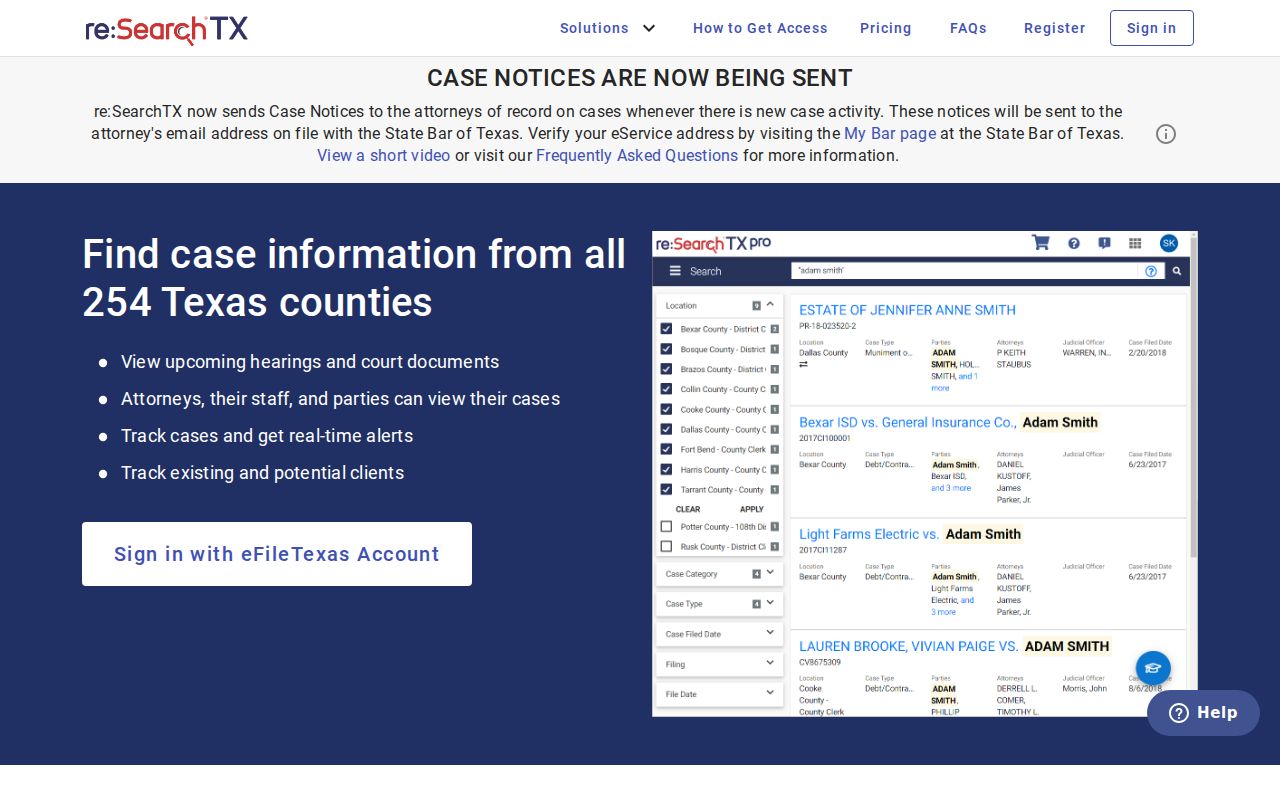
The image illustrates the statewide layer, which should confirm or extend a Hale clerk search rather than replace it.
Note: A missing online result does not prove that no Hale County criminal court case or clerk-held document exists.
Inside a Hale County Case File
A Hale County criminal case file gives document-level context that a statewide name-based history cannot. It can show what charge was formally filed, which motions and orders followed, how the accused pleaded, and what result the court entered. Each item answers a different question. The docket is a timeline or index, while the charging instrument, judgment, and sentence are filed records with their own text.
| Cause Number and Court | Identifies the case and the Hale County court responsible for its file. |
|---|---|
| Charging Instrument | Shows the complaint, information, or indictment and the filed allegations. |
| Docket Entries | Lists filed events, settings, hearings, motions, and orders in sequence. |
| Plea and Disposition | Records the plea and whether the case ended by dismissal, acquittal, conviction, or another result. |
| Judgment and Sentence | States the court's final judgment, punishment, confinement, or supervision terms. |
| Financial Entries | May show court costs, fines, and the case ledger where available. |
The Texas DPS public name search serves a narrower purpose. It releases DPS-held convictions, deferred adjudications, and arrests tied to those outcomes under Government Code Section 411.135. It does not replace the pleadings, hearing history, orders, or complete file at the Hale clerk.
Paperless Hale Criminal Files
The Hale County District Clerk says the office actively e-files criminal matters and is paperless in those cases. Scanned documents are recognized as originals, and the source papers are not retained. Thus, asking for the physical original may point a requester toward an item the office does not keep. Ask instead for the clerk's authoritative filed image, then specify whether an ordinary or certified copy is needed.
The official Hale portal provides a visual starting point for that digital system. The following image was captured from the county-linked Tyler Public Access source.
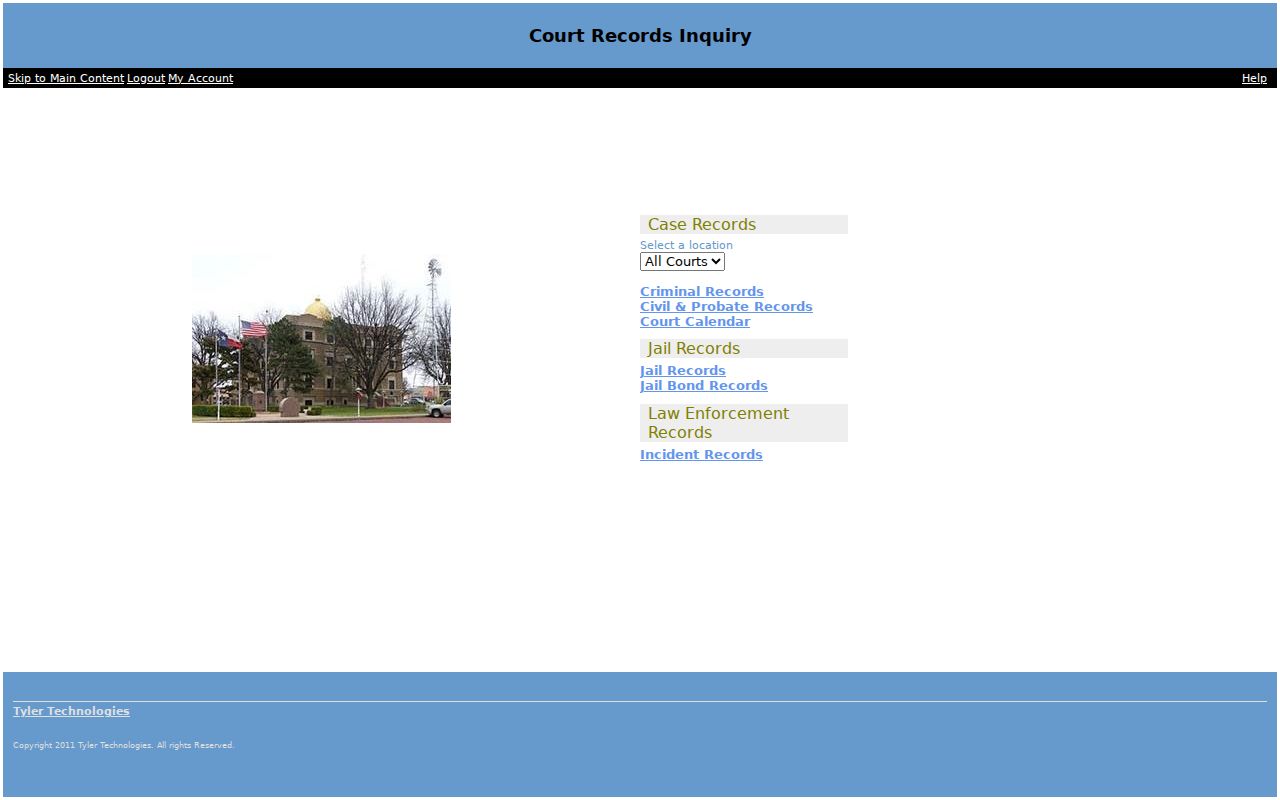
The digital view helps locate a case, while the clerk remains the source for a certified Hale County court record.
How a Criminal Case Moves
A docket makes more sense when each entry is tied to its stage. A prosecutor's filed charge can differ from the booking allegation, and pretrial motions can alter what reaches a plea or trial. The judgment then states the court's disposition. Sentencing may be part of the same event or a later entry. Read the Hale County docket in order and open the filed document behind any key event when it is available.
Case flow: Charges Filed › Arraignment › Pretrial › Plea or Trial › Disposition › Sentencing
The process also explains why a recent arrest may not yet yield a filed Hale County criminal case. Until the prosecutor acts and the clerk receives a charging instrument, a booking record and a court file remain distinct. The local indigent-defense plan adds another tracked event: an appointing authority reviews an indigence affidavit no later than three working days after receipt and, if indigence is found, appoints counsel that day.
Hale Charges and Final Outcomes
Texas charge classes signal the ordinary statutory range, not the final result in a Hale County case. Class C misdemeanors are ordinarily fine-only, while Class B and Class A misdemeanors can carry jail. Felony classes run from state jail felony through capital felony. Penal Code Chapter 12 also permits enhancements that may change the category or range. A label in an early docket entry should never be treated as the sentence.
- Filed charge
- The offense alleged in the complaint, information, or indictment accepted into the court file.
- Disposition
- The way the case ended, such as dismissal, acquittal, conviction, or deferred adjudication.
- Judgment
- The court's formal written decision, which should be read with the sentence and any later order.
- Enhancement
- A pleaded fact that may raise the offense level or punishment range under Texas law.
Check the charging instrument for enhancement allegations and the judgment for the result actually entered. That pair gives more reliable context than a charge label alone.
Case Record Access and Restrictions
Filed judicial case records follow court-access rules, which are distinct from a Public Information Act request to an executive agency. Searchable metadata does not make every document or personal detail public. Juvenile information, expunged matters, nondisclosed criminal-history information, protected victim or child information, confidential identifiers, and some investigative material may be withheld, sealed, redacted, or omitted from the online view.
Texas Government Code Chapter 411 governs criminal-history access and nondisclosure, while current expunction law appears in Code of Criminal Procedure Chapter 55A. Those limits do not mean every absent case was sealed. A spelling issue, court mismatch, older index, or portal permission can produce the same surface result. Ask the Hale County clerk to confirm whether a public file exists and what may be inspected.
Federal Cases Beyond Hale Courts
A federal prosecution connected to Hale County does not appear as a state trial file in the District Clerk's system. Hale lies in the Lubbock Division of the U.S. District Court for the Northern District of Texas. Federal dockets and documents are accessed through PACER, while the federal clerk's office is in Lubbock. That is a separate path from the Hale Tyler portal, re:SearchTX, Texas DPS history, and state custody tools.
Federal custody is separate as well. The assigned image was captured from the official Federal Bureau of Prisons inmate locator.
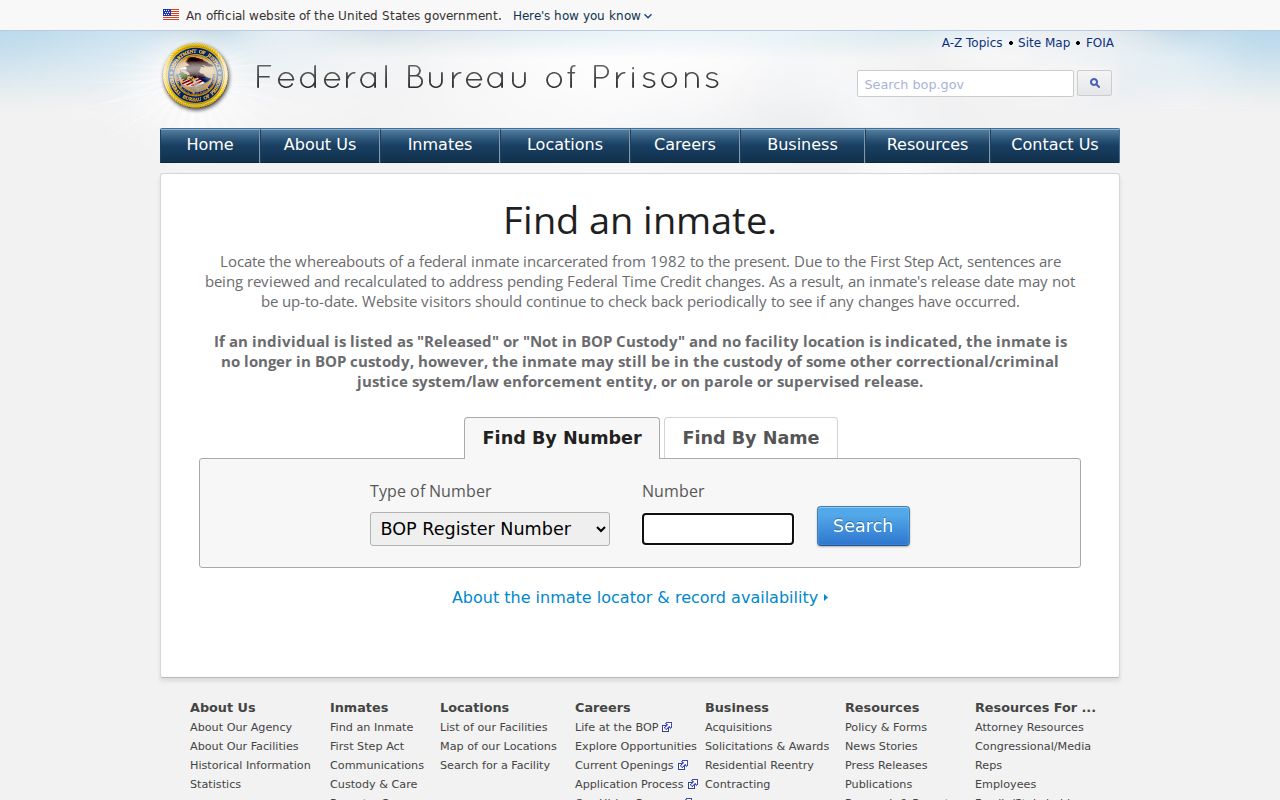
The locator can confirm federal custody or release data, but it does not supply the motions, orders, judgment, or docket held in a federal case file.