
Sex Offender Checks in Hale County
The Texas Public Sex Offender Registry is the main public search channel for Hale County. Texas DPS manages the statewide database under Code of Criminal Procedure Chapter 62. Local authorities gather and verify registration details, transmit them to DPS, and make the public portion available in their own jurisdictions. The state search is therefore the best first stop for a broad Hale County registry search. It can search across city lines and avoid the false assumption that every registrant reports to the sheriff.
Start with the most reliable facts available. A full name can narrow a person search. An address, city, ZIP code, or county can support a place search. Then compare the photo, aliases, physical description, reported location, offense facts, and registering authority before drawing a conclusion. Common names and old addresses can cause a bad match. Registry data can also lag a reported move, so a public profile is a lead for safety planning, not a reason to confront a person at an address.
The official registry search shown by Texas DPS is the source for the statewide lookup.
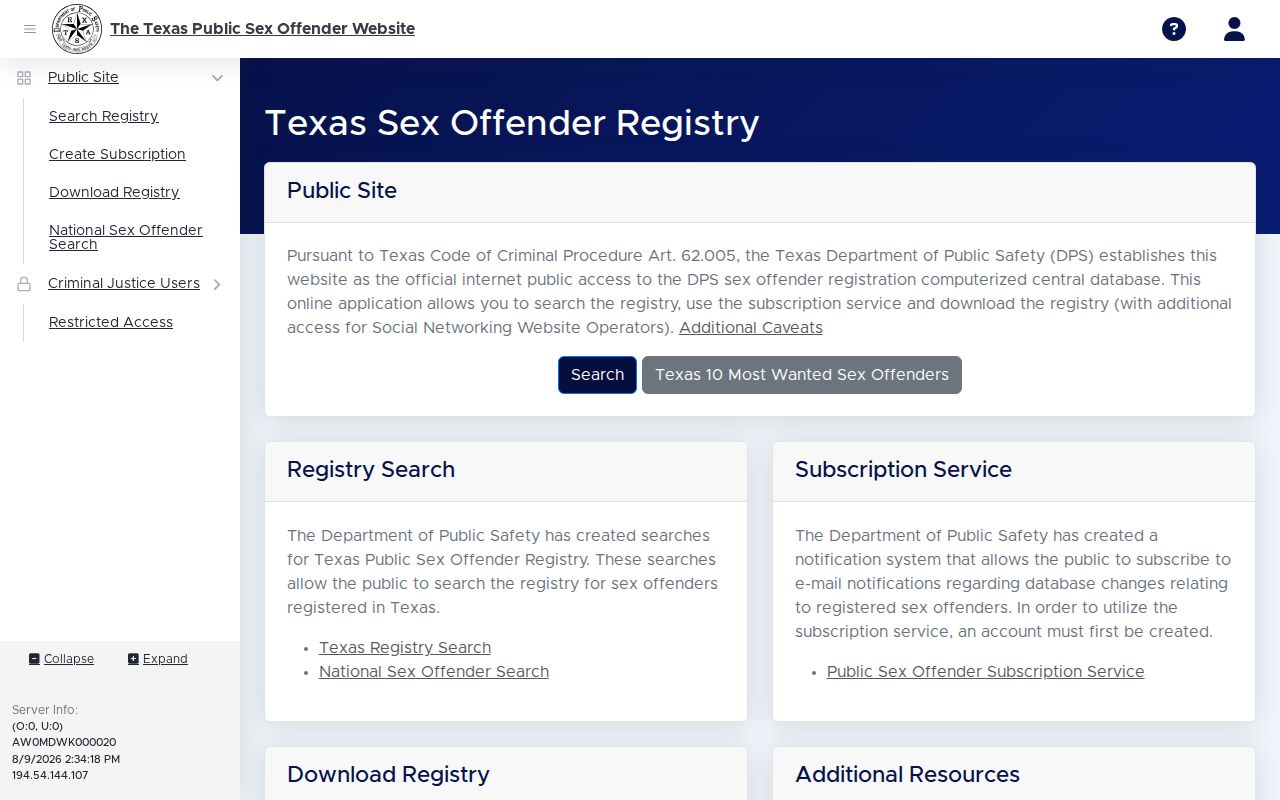
Its statewide reach makes the county filter useful when the relevant town or registering agency is not yet known.
Hale County Registry Offices
Registration responsibility follows local boundaries. A person who resides within an incorporated municipality ordinarily registers with that city's police chief. A resident outside a municipality registers with the Hale County Sheriff. The same split applies to a nonresident who works or attends school in Texas: the proper authority is tied to the municipality or county where that activity occurs. Call before visiting because the research does not establish a common registration schedule for these offices.
Hale County Sheriff
1900 South Columbia Street
Plainview, TX 79072
806-296-2724
Registration authority for unincorporated Hale County. See the official Sheriff and Jail page.
Plainview Police Department
901 Broadway Street
Plainview, TX 79072
806-296-1182
Registration authority within Plainview. Confirm the appointment process through the department page.
Abernathy Police Department
811 Avenue D
Abernathy, TX 79311
806-298-2541
Registration authority within Abernathy. The official police page also distinguishes Hale and Lubbock County contacts.
Hale Center City Hall
702 Main Street
Hale Center, TX 79041
806-839-2411
Call the city's published office to identify the current police registration contact.
How to Search the Texas Public Sex Offender Registry
The Texas registry supports both person and place-based approaches. Its public interface is dynamic, so exact labels and required markers can change. The research confirms the concepts below, but does not claim that each field must be filled in. Ordinary public searching does not require the restricted criminal-justice account. A public account may support subscriptions and downloads, which is different from the secure system authorities use to manage records.
- Open the official Texas registry and read its conditions of use before searching.
- Choose a name search or a place search. Use Hale as the county for a countywide result set.
- Narrow the results with a first or middle name, city, ZIP code, address, or radius when the live form offers that choice.
- Open a possible match and compare several profile fields. Contact the registering authority if a safety concern needs current confirmation.
| Search field | Type | Required | Use |
|---|---|---|---|
| Last, first, and middle name | Text | Unverified in live form | Narrow a person search, especially for a common surname |
| Address and radius | Text and selection | Unverified | Look around a location; confirm the live radius options |
| City and ZIP code | Text or selection | Unverified | Focus on a Hale County community or postal area |
| County | Selection | Unverified | Select Hale for countywide results |
| Higher education institution | Selection | Unverified | Search for registrants associated with a college or university |
Plainview and Hale County Registry Rules
Texas Chapter 62 does not create one statewide school-or-park residency buffer. A supervision condition may impose a child-safety zone, and a city may adopt its own rule. Plainview adopted Ordinance 24-3771 on November 12, 2024, now Code Article 8.07. The city rule bars a covered registrant from establishing a permanent or temporary residence within 1,000 feet of property where children commonly gather. That local limit should not be described as a blanket rule for every part of Hale County.
Plainview measures a straight line from the outer property line of the residence to the nearest property line of the protected place. For multiple homes on one property, the nearest occupied wall or a parking or drive area can control. The police chief or designee keeps a child-safety-zone map. The code also restricts leaving an exterior porch light on or otherwise inviting trick-or-treaters during set evening hours on October 30 and 31, or another city-designated date. Defenses and a written variance process exist, so the current code text controls any real case.
The Texas DPS registration program explains the state framework behind Hale County registry records.
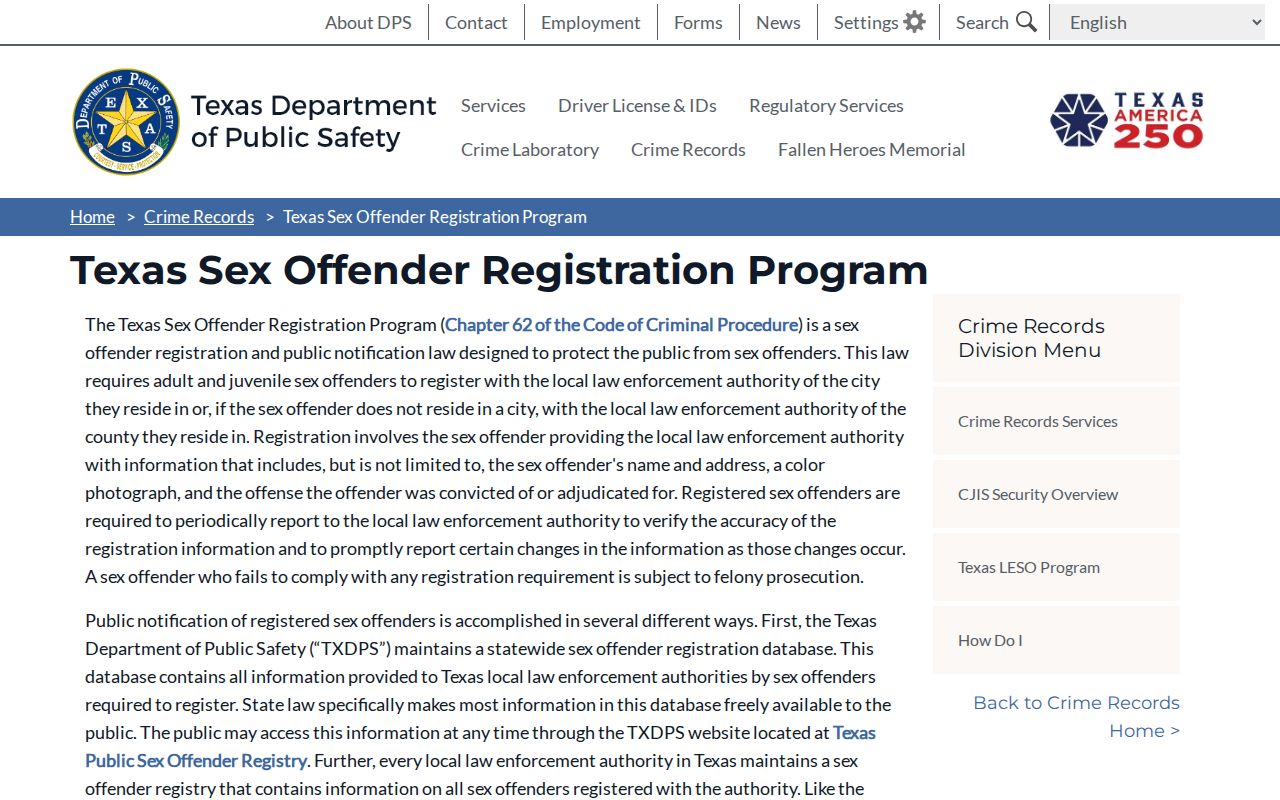
That framework leaves room for a city rule such as Plainview's while keeping the state registry as the shared public search layer.
Inside a Registry Profile
A public profile draws from a much larger registration record. Local authorities collect identity details, a current photograph, fingerprints, residence information, offense facts, supervision status, higher-education ties, and other data required by law. Public display is narrower. Texas withholds Social Security and driver's-license numbers, telephone numbers, online identifiers, employer details, victim-identifying information, and other confidential data. A juvenile court may also order qualifying juvenile registration information nonpublic.
| Name and aliases | Public identity details used to distinguish the listed person from others with a similar name |
|---|---|
| Photo and description | A recent image and physical traits such as sex, race, height, weight, hair, and eye color |
| Reported residence | A public address or geographic description, subject to update timing and legal limits |
| Registering authority | The police department or sheriff responsible for the active local registration record |
| Offense information | Offense and conviction facts, punishment, and the victim's age category without the victim's identity |
| Risk and status | The Texas numeric risk level, registration status, and other public compliance facts supplied to DPS |
A registry profile is not a full criminal case file. Pleadings, motions, the judgment, and sentence belong in the Hale County criminal court case record. A separate Hale County arrest lookup follows the arresting agency and jail rather than the registration system.
Hale County Registry Move Reports
A move into or within Hale County brings two distinct deadlines. No later than seven days before an intended address change, the registrant reports in person to the current primary authority. No later than seven days after arrival, the person reports in person to the new authority with proof of identity and residence. An initial Texas registration is due no later than the later of seven days after arrival or the first date allowed by local registration policy.
Other changes can also require prompt notice. DPS says a change to an online identifier, name, physical health, work status, or education status generally must reach the primary authority within seven days. Higher-education work or enrollment can require notice to both campus security and the local registration authority. A recurring visit is easy to miss: spending more than 48 straight hours in another municipality or county on at least three occasions in a month can trigger a report there. Failure to comply with Chapter 62 is a felony under Article 62.102, with the degree tied to the reporting duty and criminal history.
Note: A move report starts with the current authority before it shifts to the new Hale County police department or sheriff.
Texas Registration Levels and Requirements
Texas risk levels describe community risk, not how long every person must register. Level 1 means low danger and a low likelihood of more criminal sexual conduct. Level 2 denotes moderate danger. Level 3 denotes serious danger and an expectation of continued conduct. A civil commitment designation follows a court finding that a person is a sexually violent predator and brings intensive treatment and supervision. These state labels must not be recast as federal SORNA Tier I, II, and III categories.
| Texas category | Registration duration | In-person verification | Public visibility |
|---|---|---|---|
| Adult with a lifetime-triggering offense | Generally until death; Article 62.101 controls the offense list | Annual unless a more frequent category applies | Public fields generally remain searchable |
| Other adult | Through the tenth anniversary of the latest applicable dismissal, discharge, release, or supervision discharge | Annual | Public fields generally remain searchable during the duty |
| Juvenile adjudication | Through the tenth anniversary of disposition or completion, whichever is later; court relief may apply | Annual unless another rule applies | A juvenile court may order the record nonpublic |
| Two or more sexually violent offenses | Duration depends on the controlling Chapter 62 category | Every 90 days | Public fields generally remain searchable |
| Civilly committed sexually violent predator | Controlled by lifetime duty and commitment law | Every 30 days | Public fields and high-risk notice rules apply |
The DPS registration FAQ is the best plain-language source for risk, duration, verification, moves, and removal rules.
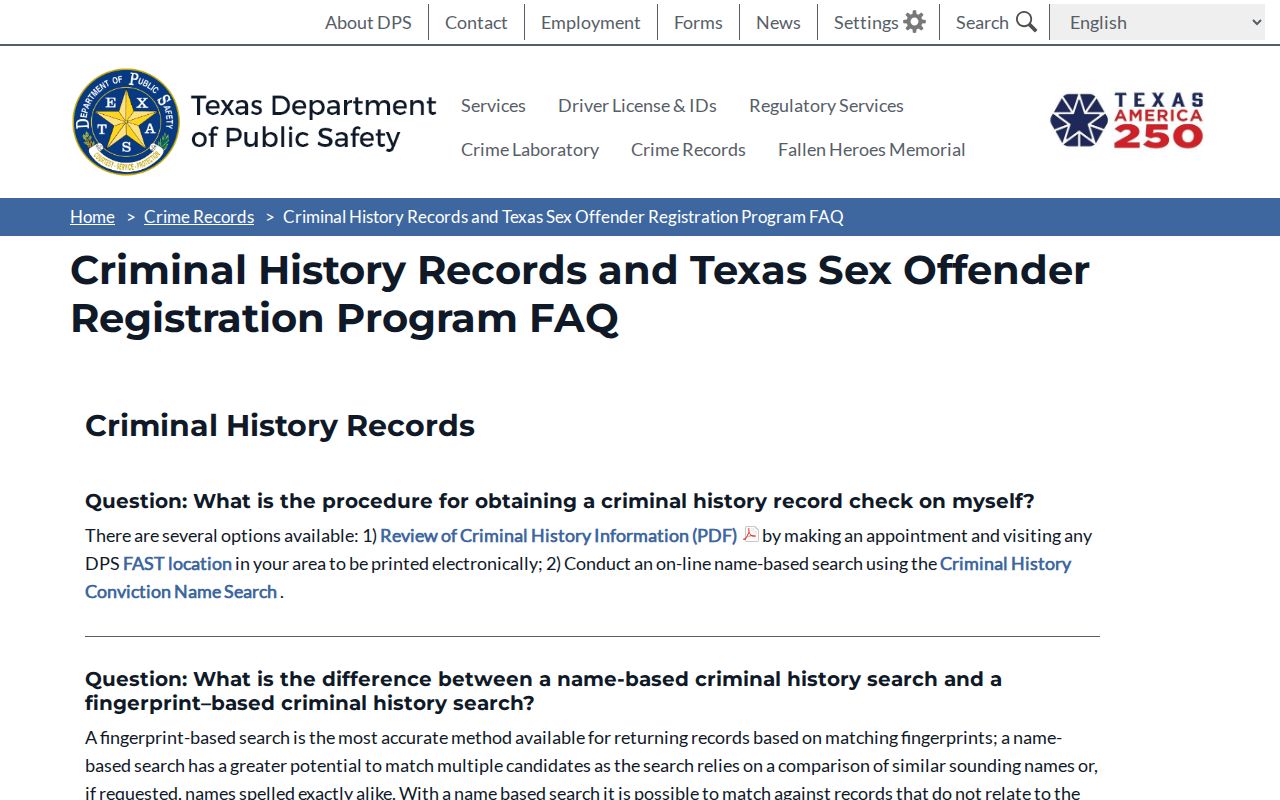
Its distinction between risk and duration helps prevent a Hale County profile from being read as a federal tier label.
Hale County Registry Verification
Most registrants verify once each year. A person with two or more sexually violent offenses verifies once every 90 days, while a civilly committed sexually violent predator verifies once in each 30-day period. The proper check-in office still depends on local jurisdiction. Hale County Sheriff staff handle unincorporated residences, and each city police authority handles residents within its municipal limits. Readers should use the profile's registering agency and call that office instead of assuming a countywide counter schedule.
Community notice extends beyond search results. When a high-risk registrant or a civilly committed sexually violent predator will be released to or move into a community, DPS sends notice in English and Spanish. DPS describes the immediate area as a one-mile radius in an unsubdivided area or three blocks in a subdivided area. Local authorities may also publish high-risk information, and defined cases require notice to public-school superintendents and private-school administrators. These notices serve awareness and safety. They do not replace a current profile check.
Cross-State Hale County Registry Searches
The Texas registry is the right statewide source, but it stops at the state line. The U.S. Department of Justice's Dru Sjodin National Sex Offender Public Website searches participating public registries when a name, former address, or safety concern crosses states. That makes NSOPW a useful second layer for someone who recently came to Hale County from elsewhere. It does not replace the Texas profile or the local registering authority.
The national search portal provides the source view used for cross-state Hale County registry research.
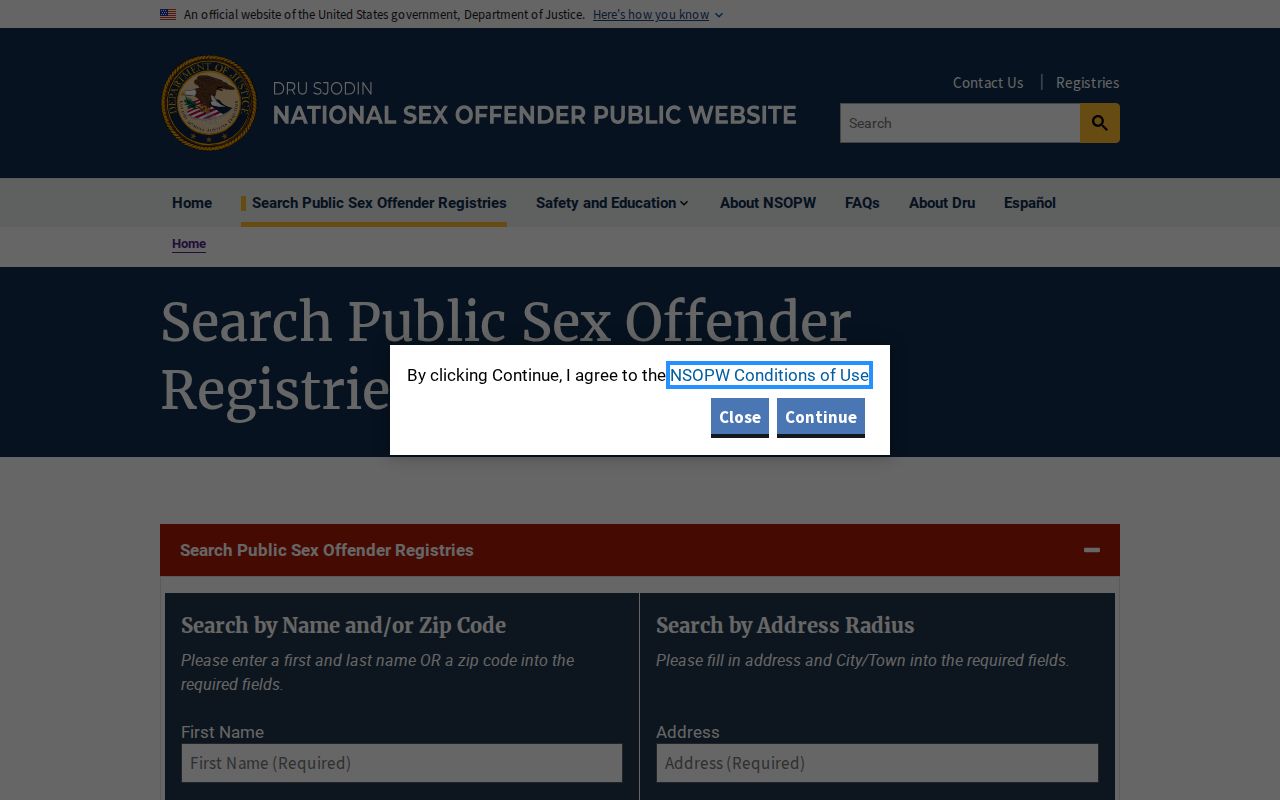
A sound match still compares several identifiers and then returns to the originating state or local office for current details.
Community Notification and Lawful Use
Registry information supports personal safety and community awareness. It is not an invitation to investigate, visit, or confront a listed person or anyone at a reported address. A neighbor who suspects a registration failure should contact the police department with jurisdiction or the Hale County Sheriff. Law enforcement can check facts that the public profile cannot show, including a recent report that has not yet reached the display.
If a duty has expired but a Hale County listing remains, DPS directs the person to the agency tied to the most recent event in the public record. That agency must confirm the full state and national disposition history, the correct offense, the discharge date, the lack of another registration basis, and the absence of a current supervision condition. Supporting proof can include a certified charging instrument, judgment, discharge order, release certificate, or agency statement. DPS Sex Offender Registration program staff can be reached at 512-424-2800, but local correction should start with the updating agency.
Criminal registry misuse is illegal: Texas Code of Criminal Procedure Chapter 62 authorizes registration and public notification, not threats, injury, harassment, intimidation, or another crime against a listed person or anyone at the address. Such conduct can bring criminal or civil consequences. Report suspected noncompliance to law enforcement instead.